Trending

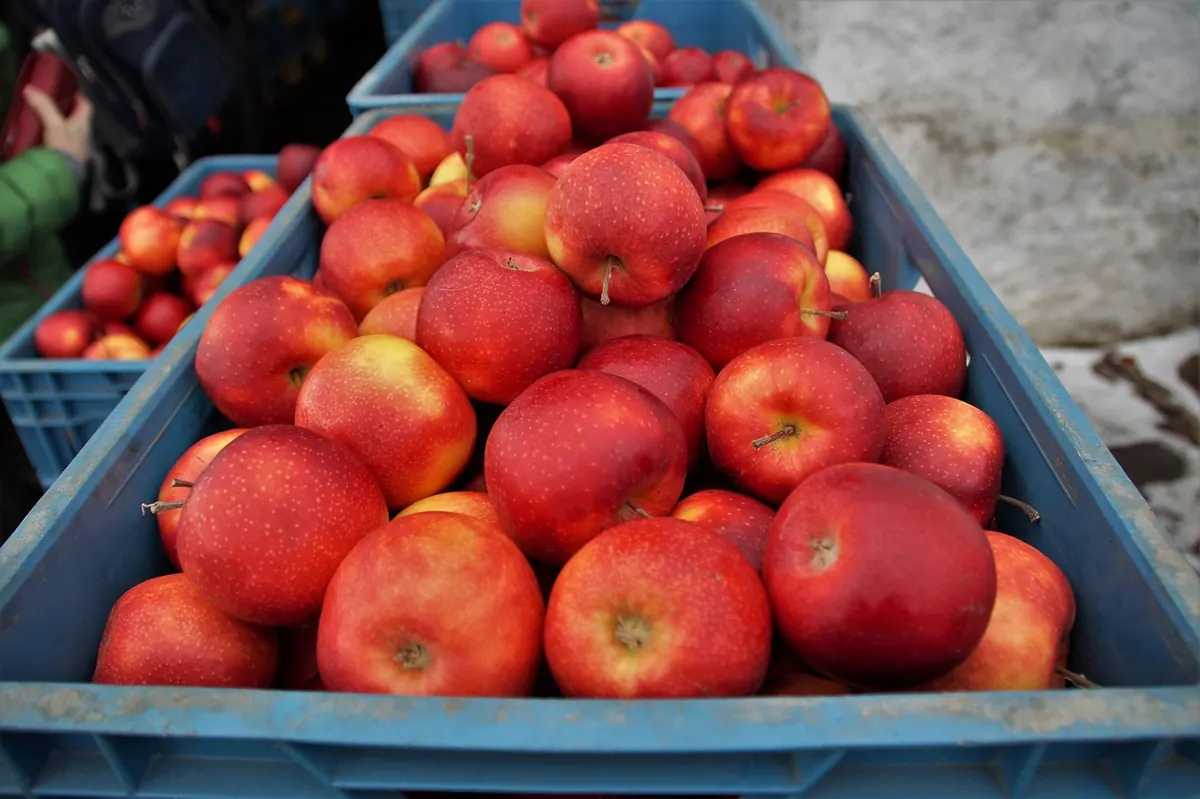
The first sharp frost is a useful prompt. Once the nights turn cold, fruit left on the tree softens and starts to drop, and anything you mean to keep needs to be picked, sorted and tucked away within a fortnight. Get it right and you will still be eating your own russets in February. Get it wrong and you will be clearing a tray of saggy, furred apples long before Christmas.
British conditions make this a balancing act. Our sheds swing between freezing and mild, the air is damp, and mice are always looking for a way in. None of that is a problem if you work through the job in the right order.
Apples for storing should be picked, not shaken from the tree. Cup each fruit in your palm, lift it slightly and twist. If it comes away with the stalk intact, good; a torn stalk is an open wound and the first place rot will start.
Leave the windfalls and bruised fruit for juice, chutney or crumble. They will not keep, and putting them in the store risks everything around them. Lay picked fruit gently into a trug or shallow box, never more than two layers deep. And do not wash fruit you intend to store — the dusty bloom on the skin is a natural protective layer, and washing it off invites mould.
This is where most crops are lost. Be ruthless. Anything with a codling moth hole, a brown rot ring, a split, a deep scab lesion or a soft patch is not a storing apple.
Work into three piles: eat now, store, and process. Keep varieties separate so you know what you have and when to look at it, and keep apples and pears in different boxes — pears ripen on a different clock and are more sensitive to the ethylene that apples give off.
The old method still works. Wrap each apple in newspaper, tissue paper or a purpose-made apple wrap, then sit them in a single layer so no fruit touches its neighbour. If fruit never touch, rot cannot pass from one to the next by contact.
Apples keep best in the dark at around 2–4°C with humidity near 85–90 per cent. That describes a proper fruit store or a good cellar. Most gardeners make do with a garage, an unheated room or an insulated shed, which is perfectly workable as long as you keep an eye on it.
Hang a maximum-minimum thermometer where you can see it. Below freezing, the flesh goes glassy and then brown as it thaws, so insulate with hessian, blankets or a thick layer of newspaper over the boxes when a hard frost is forecast. Too warm, and fruit ripens and shrivels fast. Dry air wrinkles skins, so stand a shallow tray of water nearby. Still air encourages rot, so leave a vent open rather than sealing the door tight.
Most pears will not ripen properly on the tree in a British summer. Pick them when they part from the spur with a gentle lift, store them cool at around 0–2°C, then bring small batches into a warm room for a few days to finish. Check the neck just below the stalk for a slight give. Conference holds well; Doyenné du Comice is shorter-lived but worth the fuss. Ripen a handful at a time rather than the whole box.
This is the step people skip, and it is the one that saves the crop. Go through the boxes, lift each fruit and feel it. Remove anything soft, spotted or mouldy at once — the whole fruit, not just the bad half — and eat its neighbours soon.
Read the signs. Wrinkled skins mean the air is too dry. Fruit ripening faster than expected means the store is too warm. Mould in an otherwise sound box points to poor ventilation or damp.
Not every apple is a keeper, and it is worth knowing roughly where yours fall before you fill twenty boxes.
Cox improves after a month or two in store, so do not judge it on the first apple out of the box. Russets tend to shrivel when the air is dry, so keep the humidity up for those.
Start with the small fruit and the thin-skinned varieties, and leave the thick-skinned late keepers until spring. Once a box is opened, use it up rather than dipping in and out, and keep the lid on the rest.
By February the remaining apples will be softening and losing flavour. That is the moment to stop storing and start cooking: sauce, baked apples, chutney or a batch of juice. Dispose of brown rot mummies rather than composting them, and scrub and dry the empty boxes before they go back on the shelf. Clean boxes and a note of what worked this year make next autumn's storing far easier.
Photo: ivabalk / Pixabay