Trending

Walk into a garden centre in early spring and the fruit trees look irresistible: neat rows of blossom, labels promising a crop within a year. The trouble arrives eighteen months later, when the tree planted two metres from the kitchen window shows no sign of stopping. Choosing well comes down to four things: final size, pollination, climate, and how much pruning you actually want to do. Get those right and a modest plot can crop heavily for decades.
Start with a tape measure, not a catalogue. A fruit tree needs sun for most of the day, air moving around it, and room to be picked from both sides without a ladder balanced in a flowerbed. Shade from a neighbour's hedge or a north-facing wall will cost you fruit and encourage disease.
Decide what job the tree is doing. A free-standing tree in a lawn needs a different shape from one trained flat against a fence. These are the main options for small gardens:
The variety on the label tells you what the fruit tastes like. The rootstock tells you how big the tree will grow, and it matters far more in a small garden. Two trees of the same apple variety can finish at 1.8m or 5m depending on what they are grafted onto.
For apples, look for M27 (very dwarfing, best in a large pot), M9 (dwarfing, around 2m), or M26 (semi-dwarfing, roughly 2.5–3m). MM106 gives a bigger, more vigorous tree of 3.5m or more, which is often too much for a courtyard. Pears are usually on Quince C for smaller trees or Quince A for larger ones. Plums come on Pixy (dwarfing) or St Julian A (larger), and sweet cherries on Gisela 5 if you want something you can reach.
Dwarfing rootstocks have a trade-off: they need staking for life, they crop earlier, and they sulk if grass or shrubs compete with their roots. Keep a clear metre around the trunk.
This is the point that trips up most beginners. Many fruit trees cannot set fruit with their own pollen and need a different variety flowering at the same time. Nursery catalogues list pollination groups, usually numbered from early to late; two varieties in the same group, or in adjacent groups, will generally overlap.
Some trees are reliably self-fertile, which makes them a safe first purchase. Victoria plum, Stella and Sunburst cherries, and Conference pear (partly self-fertile) are good examples, though even these crop better with a partner nearby. Apples are trickier: Bramley's Seedling is triploid, meaning it cannot pollinate anything else and needs two different varieties nearby to crop at all.
If a neighbour within about 20 metres grows a compatible tree, you may be covered. If not, plant a pollinator or a crab apple such as John Downie, which flowers over a long period and is a useful backup for several apple varieties.
Apples, pears, plums and damsons are the dependable backbone of British gardens. Cherries crop well but dislike heavy, waterlogged clay, where they are prone to splitting and disease. Apricots, peaches and figs are possible, but give them the warmest wall you have and accept that a late frost can wipe out a crop.
Two site details are worth checking before you dig:
Also think about disease rather than chasing exotic varieties. In damp western gardens, scab-resistant apples such as Discovery, Katy or Egremont Russet will save you a great deal of spraying and disappointment. Pears generally prefer a sunnier, milder spot than apples.
If your only space is paving, you can still grow fruit. Use the largest pot you can move, at least 45–50cm across, with a decent loam-based compost and crocks or stones for drainage. Dwarf apples on M27, pears on Quince C, and blueberries work well; blueberries need ericaceous compost and rainwater rather than tap water.
Potted trees dry out fast between May and September, so watering is a daily job in hot spells. Feed from spring to midsummer, top-dress the compost each year, and repot into a slightly larger container every few years before the roots become a solid mat.
Bare-root trees, sold between late autumn and early spring while dormant, are cheaper, establish faster and come in far more varieties than potted stock. Order early for the best choice. When the tree arrives, check the graft union — the knobbly join near the base — is sound and undamaged.
Plant on a dry, frost-free day. Dig a hole wider than the roots but no deeper than they were growing before, spread the roots out, and backfill with the soil you removed, mixing in some well-rotted compost. Set the tree so the graft union sits about 10cm above soil level. Firm it in, water well, and stake dwarfing trees straight away.
Water regularly through the first two summers, even in wet spells, because new roots dry out quickly. Keep a weed-free circle around the trunk and mulch with bark or compost, leaving a small gap so the mulch does not touch the bark. Prune lightly in winter to build an open framework, and resist the urge to cut hard — fruit forms on older wood on most apples and pears. Net cherries and soft fruit as they colour, and thin heavy apple crops in July so branches do not snap.
Two or three well-chosen trees, planted with their pollination partners in mind, will keep a small garden in fruit for years. Start there, learn how your site behaves, and add a cordon or two next winter.
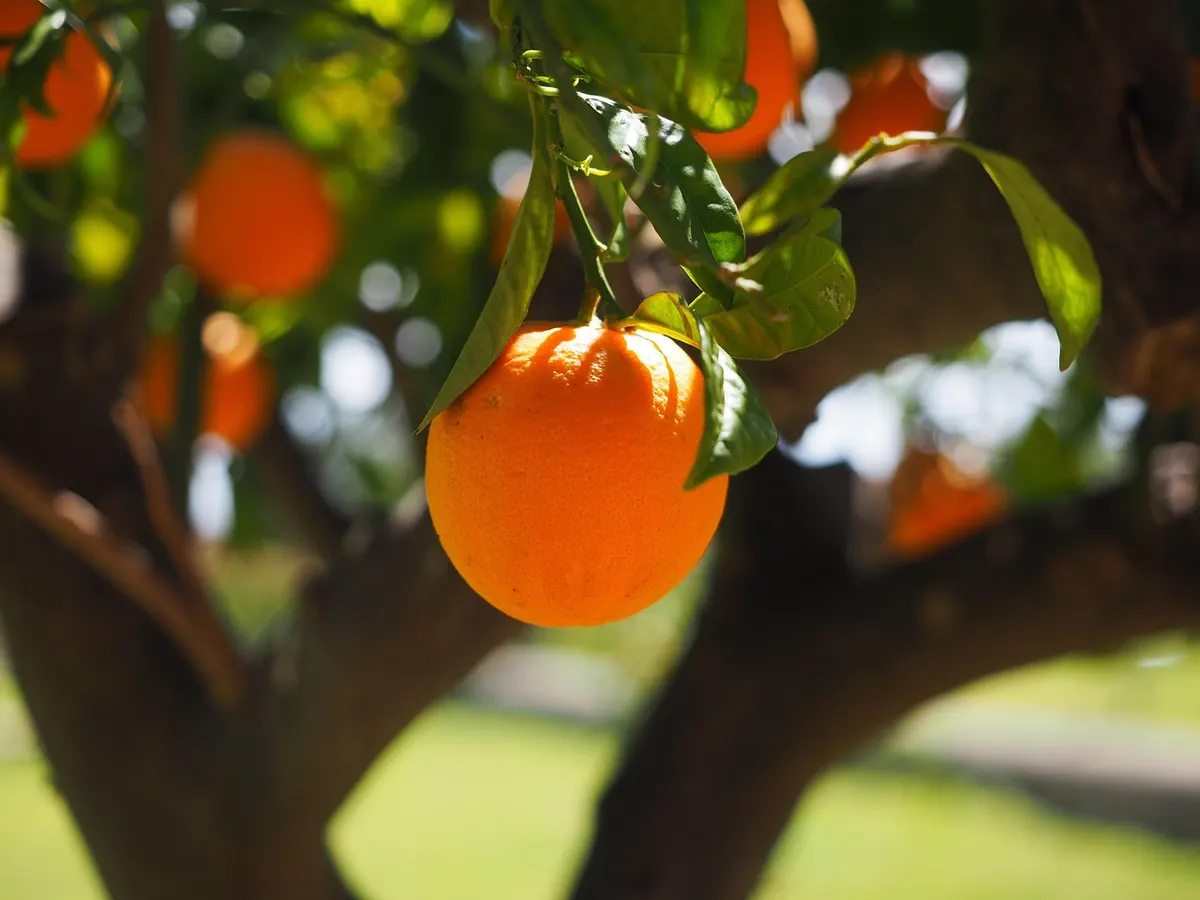
Photo: Hans / Pixabay