Trending

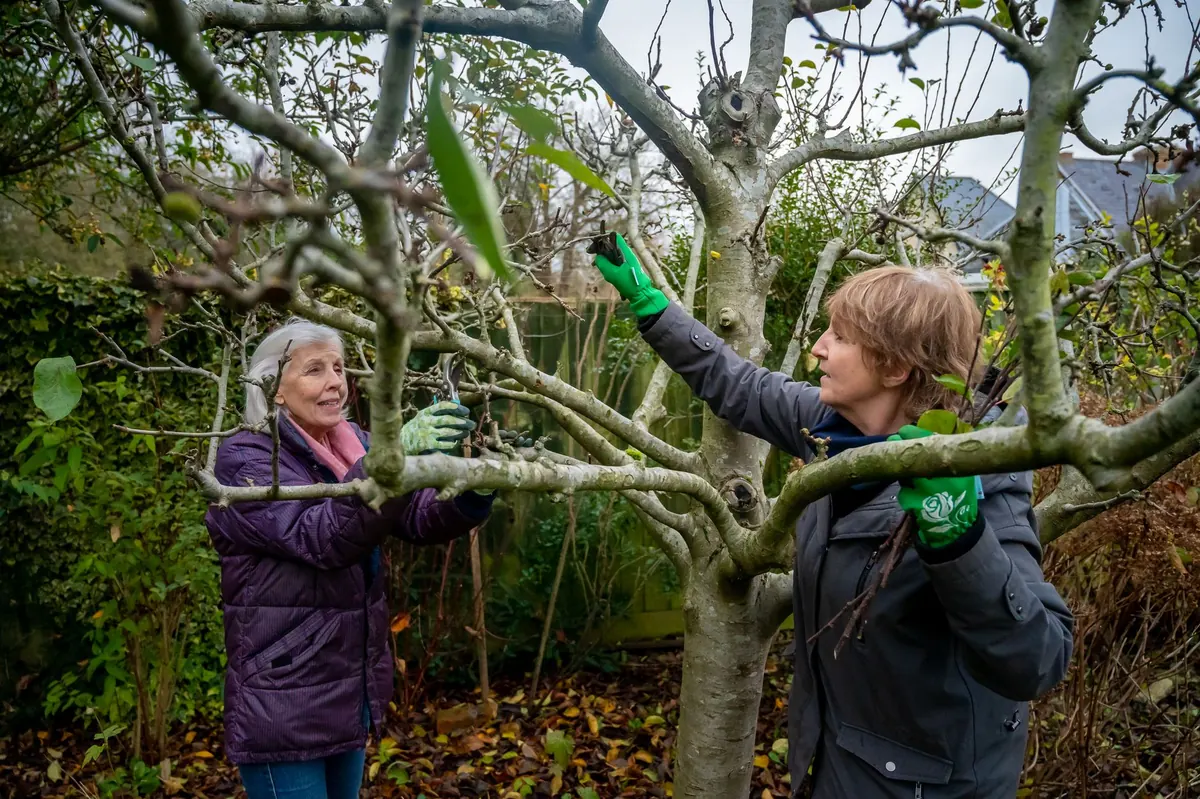
An apple tree left alone will still crop. It will simply crop eight feet up, in a tangle of crossing branches, and the apples will be small, scabby and out of reach. Pruning is how you bring the fruit back down to picking height, open the middle of the tree to light and air, and keep the whole thing going for another thirty years. The cuts matter — but the timing matters just as much.
Aim for four things: a shape you can manage, light through the canopy, air moving freely, and wood young enough to crop well. Light is the big one. Apples size up and colour on wood that sees sun, and flower buds form best in bright conditions. Air matters too — an open tree dries quickly after rain, so scab and canker have less of a hold. A well-shaped mature tree often needs nothing more than deadwood removal and a light thinning.
Don't cut for the sake of it. Every cut is a wound, every wound is an entry point, and hard pruning pushes leafy growth at the expense of fruit. If the tree crops well and you can reach the apples, do less.
Think of pruning as redirecting the tree's energy. A branch that is removed sends its share of sap and nutrients elsewhere — usually into the remaining framework and fruit buds. That is why a light, regular prune is far better than a drastic one every few years. It is also why an over-pruned tree reacts by throwing out long, leafy water shoots. Those shoots rarely fruit, and they shade the spurs you were trying to encourage.
Two things to know: where your variety carries its fruit, and how vigorous the tree is.
Most apples are spur bearers — 'Cox's Orange Pippin' and 'Egremont Russet' among them. They flower on short, stubby spurs on wood that is two years old and older, and they take winter spur pruning well. With these, you can shorten side shoots to a few buds and thin out overcrowded spurs without losing the crop.
Others, including 'Discovery' and 'Katy', are tip bearers. Much of the crop sits at the ends of last year's shoots, so shortening all that growth in winter removes the following autumn's apples. Treat them lightly: thin the framework, take out what is dead or crossing, and leave the young wood alone.
If you're not sure which you have, prune lightly this winter and watch where the blossom appears in spring. That tells you everything. Vigour counts as well — a tree on a dwarfing rootstock such as M9 has little wood to spare, so keep the cuts small and infrequent. A tree on M26 or MM106 can take a little more, while a vigorous standard on M25 may need a firmer hand just to keep it manageable.
Most UK growers prune apples in winter, but the best results come from thinking across the whole year. Different seasons do different jobs.
This is the main structural prune. The tree is dormant, the framework is visible, and you can see exactly what needs removing. Do it on a mild, dry day rather than in hard frost. In wet, mild winters, wounds can be slow to heal and canker spores are active, so avoid leaving large open cuts if you can. Winter is the time to remove dead, diseased and crossing branches, and to shape young trees.
Keep hands off the secateurs unless you are removing damaged growth or dealing with a broken branch. The tree is using its energy to flower, set fruit and grow. If you prune now, you remove leaves that would feed the crop and may encourage soft regrowth that aphids love.
Summer pruning is the secret weapon for trained forms such as cordons, espaliers and fans. It restricts vigour and helps fruit buds form close to the main framework. Shorten long side shoots to about three to five leaves, leaving the leader alone. For tip bearers, a light summer tidy after fruiting is often safer than winter cutting because you can see where next year's blossom buds are sitting.
After harvest, clear out any broken or diseased wood and remove mummified fruit still hanging on the tree. This reduces the carry-over of scab and brown rot into winter. Leave the main structural work until the tree is fully dormant.
Sharp tools make clean cuts, and clean cuts heal faster. You need bypass secateurs for shoots up to finger thickness, loppers for branches up to about 3cm, and a pruning saw for anything bigger. Bypass secateurs cut like scissors; anvil secateurs crush the stem and should be avoided on living wood.
When you remove a branch, cut back to the branch collar — the slight swelling where the branch meets the trunk or parent limb. Do not cut flush to the trunk, and do not leave a long stub. For anything heavier than your wrist, use the three-cut method: first cut upwards a few inches out from the collar, then cut down from above to meet it so the branch drops, then make the final clean cut at the collar.
Never leave a stub, and never cut flush. The branch collar is the tree's own healing zone.
In the first five years, your job is to build a frame. Choose three to five well-spaced main branches and remove anything that competes with them. Keep the trunk clear of lower shoots. Do not worry about fruit yet — a young tree needs leaves and roots more than it needs apples.
A mature, well-shaped tree usually needs only deadwood removal and a light thinning every year or two. Remove the oldest, least productive branches gradually to encourage new replacement wood. If you can reach the fruit and the tree is cropping, you are doing enough.
Do not try to restore an old, overgrown tree in one winter. Spread the work over three years. In year one, remove dead, diseased and crossing wood. In year two, thin the canopy and lower the height. In year three, finish the shape and start renewal pruning. Drastic pruning in a single season can send an old tree into shock and produce nothing but water shoots.
Do not paint wounds with old-fashioned tar or wound paint. Modern advice is to leave them clean and let the tree seal them naturally. If canker is present, cut back to healthy wood and disinfect your blades with methylated spirits or a garden disinfectant between cuts.
Good pruning goes hand in hand with good culture. Mulch around the tree in spring, but keep mulch clear of the trunk. Avoid excessive nitrogen feed, which pushes leafy growth at the expense of fruit. In the UK's damp climate, choose resistant varieties where you can, and keep the grass and weeds down around young trees so they establish quickly.
Pruning is not a one-off winter chore. It is a conversation with the tree: you cut a little, watch how it responds, and adjust next year. Learn whether your apple is a spur bearer or a tip bearer, keep the centre open, cut to the branch collar, and do the bulk of the work while the tree is dormant. Do that, and you will have apples at arm's reach for decades.