Trending

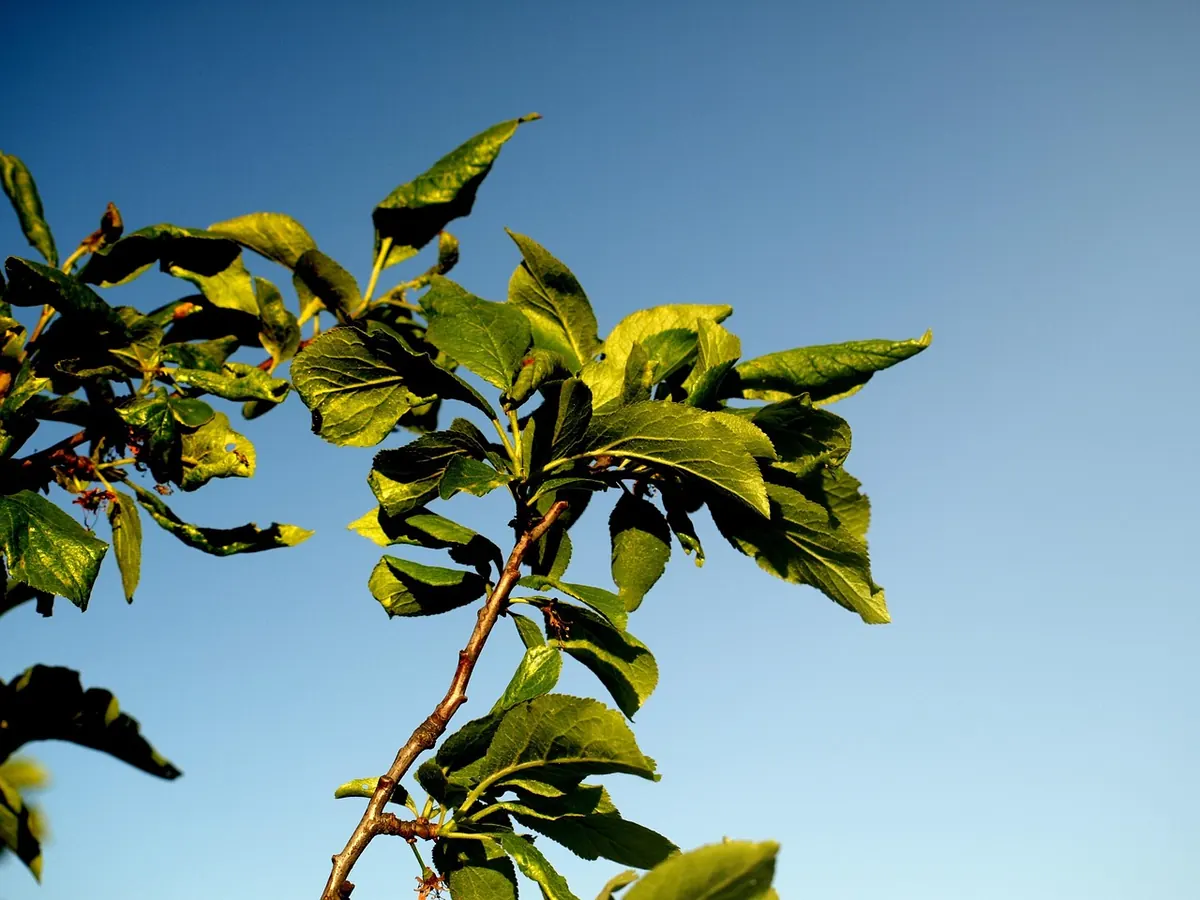
Plums are generous trees, right up until the moment you prune them at the wrong time of year. Cut an apple in February and very little happens. Cut a plum in February and you may be handing silver leaf fungus its best route into the wood. Most pruning mistakes with plums come back to timing — and timing is the one thing you can control.
Silver leaf is caused by a fungus that releases its spores in cool, damp weather, mainly from autumn through to spring. Those spores land on wet bark and, above all, on fresh wounds. Prune in winter and you leave an open cut exposed for weeks at exactly the moment spores are in the air. Prune in summer and the tree is growing actively, sap is moving and gum seals the cut quickly, while the air is drier and spore numbers are lower.
Bacterial canker behaves in much the same way, spreading in wet weather and entering through wounds — which is why you see sunken, gummy patches on plum and cherry branches. Summer pruning does not make a tree immune to either disease, but it tilts the odds firmly your way.
If you do see silvered leaves — a metallic sheen where the leaf surface lifts from the tissue beneath — don't reach for the saw straight away. Drought stress, waterlogging and root damage can produce similar symptoms. Watch the tree through the season and get a proper diagnosis before deciding to remove it.
The main window is late June to mid-August. For most garden plums — bushes, half-standards and wall-trained fans — that gives you six to eight weeks when the tree is growing strongly and the weather is on your side. Fans are usually done twice: in late June or early July, once the fruit has set, to cut back shoots that have done their job, then again in late summer to tidy the growth tied in for next year.
After mid-August the case for pruning weakens fast, and by September the tree should be left alone. Two exceptions are worth knowing. Dead, broken or diseased wood can come off at any time, since a torn branch will only get worse. Light thinning of congested shoots is also possible while the tree is in leaf, if you accept a slightly higher risk.
Work on a dry day, with dry weather forecast. If the tree is drought-stressed, water it well a few days beforehand — a struggling tree seals its cuts slowly.
Two habits cause most of the trouble: leaving stubs, and cutting flush. A stub left beyond a bud or side shoot cannot be fed by the tree, so it dies back, and dead wood invites fungus. A flush cut removes the branch collar — the raised ring of tissue at the base of a branch that seals the wound.
Plums react to hard pruning by growing. Take out half the canopy in one afternoon and you will get a thicket of whippy, upright shoots that shade the fruit, rub themselves raw and will not crop for years.
Around a quarter of the canopy is a sensible ceiling for a healthy tree in a single summer. If a plum has been neglected, spread the work across two or three seasons: open the centre one year, shorten the long shoots the next, and finish the structural work in the third. Bear in mind that plums crop heavily — a tree that has carried a big load of fruit and then been cut back hard has little in reserve to work with.
Apples and pears are often spur-pruned, with long shoots shortened hard to build a tidy framework of fruiting spurs. Do that to a plum and you push it into vigour and lose fruit. Plums crop on spurs on two-year-old and older wood, and on last season's growth, so the aim is a steady supply of young wood and an open centre.
Grow plums as an open-centred bush, a half-standard or a fan, keeping the middle of the tree clear so that light and air reach the fruit. Moving air is one of the best defences against brown rot and canker.
What to take out, in order of priority:
On a fan, the routine is rolling replacement: tie in the best young shoots to extend the arms, then cut tired older wood back to a younger replacement.
Bacterial canker travels on blades as readily as on rain. Wipe secateurs and saws between trees — and between cuts on a tree with visible canker — using methylated spirits or a garden disinfectant. Sharp blades leave cleaner cuts that seal faster.
Clear up properly. Burn infected prunings or take them to the tip. Don't compost silver leaf or canker wood, and don't leave it lying on the ground under the tree; mummified fruit and fallen leaves carry rot spores through the winter just as effectively.
Wound paints are no substitute for pruning at the right time, and most current advice is to leave a clean cut unpainted so that it seals naturally. Watering and mulching in spring will do more for the tree's health.
If you want one list to work from, this is it.
Get the timing right and everything else becomes more forgiving. A plum pruned in July will shrug off cuts that would put the same tree at serious risk in January — and it will carry on cropping while you learn the finer points.
Photo: olarts / Pixabay